时间戳
本主题解释时间戳的概念,并介绍 Milvus 向量数据库中与时间戳相关的四个主要参数。
概述
Milvus 是一个向量数据库,可以搜索和查询从非结构化数据转换而来的向量。在进行数据操作语言(DML)操作(包括数据插入和删除)时,Milvus 会为操作中涉及的实体分配时间戳。因此,Milvus 中的所有实体都有一个时间戳属性。同一 DML 操作中的实体批次共享相同的时间戳值。
时间戳参数
在 Milvus 中进行向量相似性搜索或查询时,会涉及几个与时间戳相关的参数。
-
Guarantee_timestamp -
Service_timestamp -
Graceful_time -
Travel_timestamp
Guarantee_timestamp
Guarantee_timestamp 是一种时间戳类型,用于确保在进行向量相似性搜索或查询时,在 之前由 DML 操作更新的所有数据都是可见的。例如,如果在下午 3 点插入一批数据,下午 5 点插入另一批数据,而在向量相似性搜索时, 的值设置为下午 6 点。这意味着分别在下午 3 点和下午 5 点插入的两批数据应参与搜索。Guarantee_timestamp Guarantee_timestamp
如果没有配置Guarantee_timestamp ,Milvus 会自动取搜索请求发出的时间点。因此,搜索是在数据视图上进行的,所有数据更新都是在搜索之前通过 DML 操作完成的。
为了省去理解 Milvus 内部TSO的麻烦,作为用户,您不必直接配置Guarantee_timestamp 参数。您只需选择一致性级别,Milvus 就会自动为您处理Guarantee_timestamp 参数。每个一致性级别对应一定的Guarantee_timestamp 值。
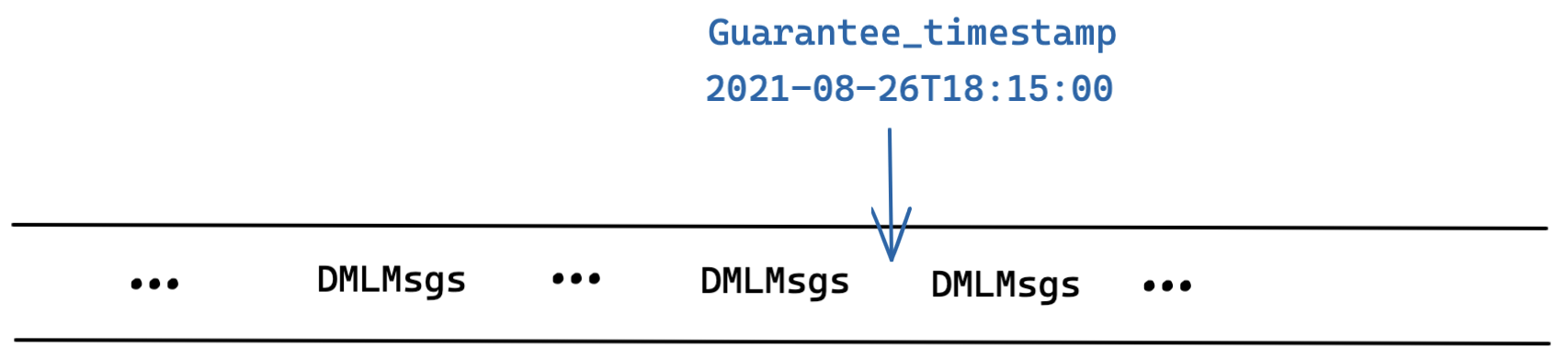 Guarantee_Timestamp.
示例
如上图所示,Guarantee_timestamp 的值设置为2021-08-26T18:15:00 (为简单起见,本例中的时间戳用物理时间表示)。在进行搜索或查询时,会搜索或查询 2021-08-26T18:15:00 之前的所有数据。
Service_timestamp
Service_timestamp 是一种由 Milvus 查询节点自动生成和管理的时间戳类型。它用于指示查询节点执行了哪些 DML 操作。
查询节点管理的数据可分为两类:
-
历史数据(或称批量数据)
-
增量数据(或称为流数据)。
在 Milvus 中,您需要在进行搜索或查询之前加载数据。因此,在发出搜索或查询请求之前,会通过查询节点加载 Collection 中的批量数据。然而,流数据是即时插入 Milvus 或从 Milvus 中删除的,这就要求查询节点保持 DML 操作和搜索或查询请求的时间轴。因此,查询节点使用Service_timestamp 来保存这样一个时间轴。Service_timestamp 可以看作是某些数据可见的时间点,因为查询节点可以确保Service_timestamp 之前的所有 DML 操作都已完成。
当有搜索或查询请求传入时,查询节点会比较Service_timestamp 和Guarantee_timestamp 的值。主要有两种情况。
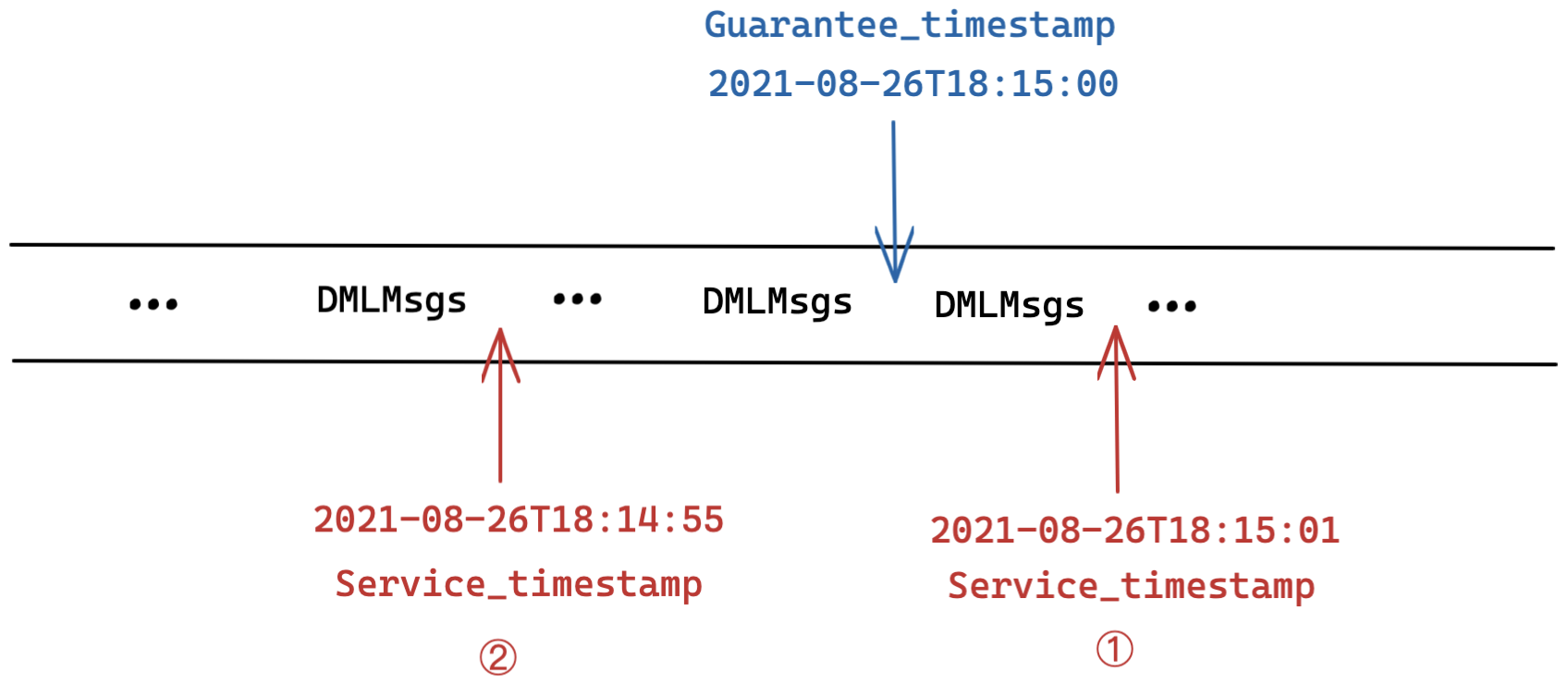 服务时间戳。
情况 1:Service_timestamp >=Guarantee_timestamp
如图 1 所示,Guarantee_timestamp 的值设置为2021-08-26T18:15:00 。当Service_timestamp 的值增长为2021-08-26T18:15:01 时,这意味着在此时间点之前的所有 DML 操作都由查询节点执行并完成,包括Guarantee_timestamp 所指示时间之前的 DML 操作。因此,搜索或查询请求可以立即执行。
方案 2:Service_timestamp <Guarantee_timestamp
如图 2 所示,Guarantee_timestamp 的值被设置为2021-08-26T18:15:00 ,而Service_timestamp 的当前值仅为2021-08-26T18:14:55 。这意味着只有2021-08-26T18:14:55 之前的 DML 操作才会被执行并完成,而该时间点之后、Guarantee_timestamp 之前的部分 DML 操作则未完成。如果在此时执行搜索或查询,所需的部分数据将不可见且不可用,严重影响搜索或查询结果的准确性。因此,查询节点需要推迟搜索或查询请求,直到guarantee_timestamp 之前的 DML 操作完成(即Service_timestamp >=Guarantee_timestamp )。
Graceful_time
从技术上讲,Graceful_time 并不是一个时间戳,而是一个时间段(如 100 毫秒)。不过,Graceful_time 值得一提,因为它与Guarantee_timestamp 和Service_timestamp 密切相关。Graceful_time 是 Milvus 配置文件中的一个可配置参数。它用于指示在某些数据变为可见之前可容忍的时间段。简而言之,可以容忍Graceful_time 期间未完成的 DML 操作。
当有搜索或查询请求传入时,可能会出现两种情况。
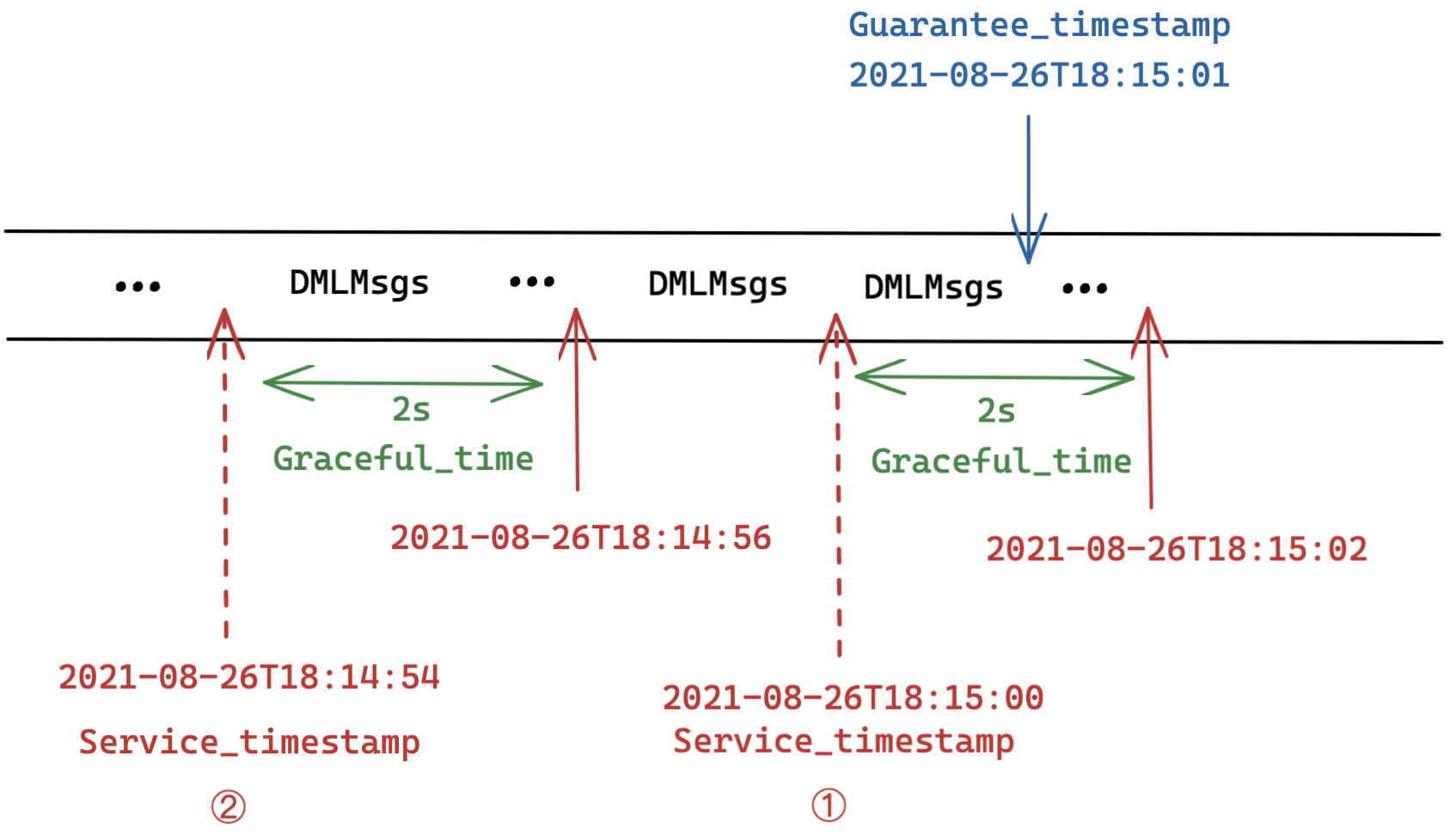 Graceful_Time.
情况 1:Service_timestamp +Graceful_time >=Guarantee_timestamp
如图 1 所示,Guarantee_timestamp 的值设置为2021-08-26T18:15:01 ,Graceful_time 设置为2s 。Service_timestamp 2021-08-26T18:15:00虽然Service_timestamp 的值仍然小于Guarantee_timestamp 的值,而且2021-08-26T18:15:01 之前的所有 DML 操作都没有完成,但如Graceful_time 的值所示,可以容忍 2 秒钟的数据不可见期。因此,传入的搜索或查询请求可以立即执行。
方案 2:Service_timestamp +Graceful_time <Guarantee_timestamp
如图 2 所示,Guarantee_timestamp 的值设置为2021-08-26T18:15:01 ,Graceful_time 设置为2s 。Service_timestamp 的当前值仅为2021-08-26T18:14:54 。这意味着预期的 DML 操作尚未完成,即使有 2 秒钟的宽限时间,数据隐形仍是不可容忍的。因此,查询节点需要推迟搜索或查询请求,直到某些 DML 请求完成(即Service_timestamp +Graceful_time >=Guarantee_timestamp )。